
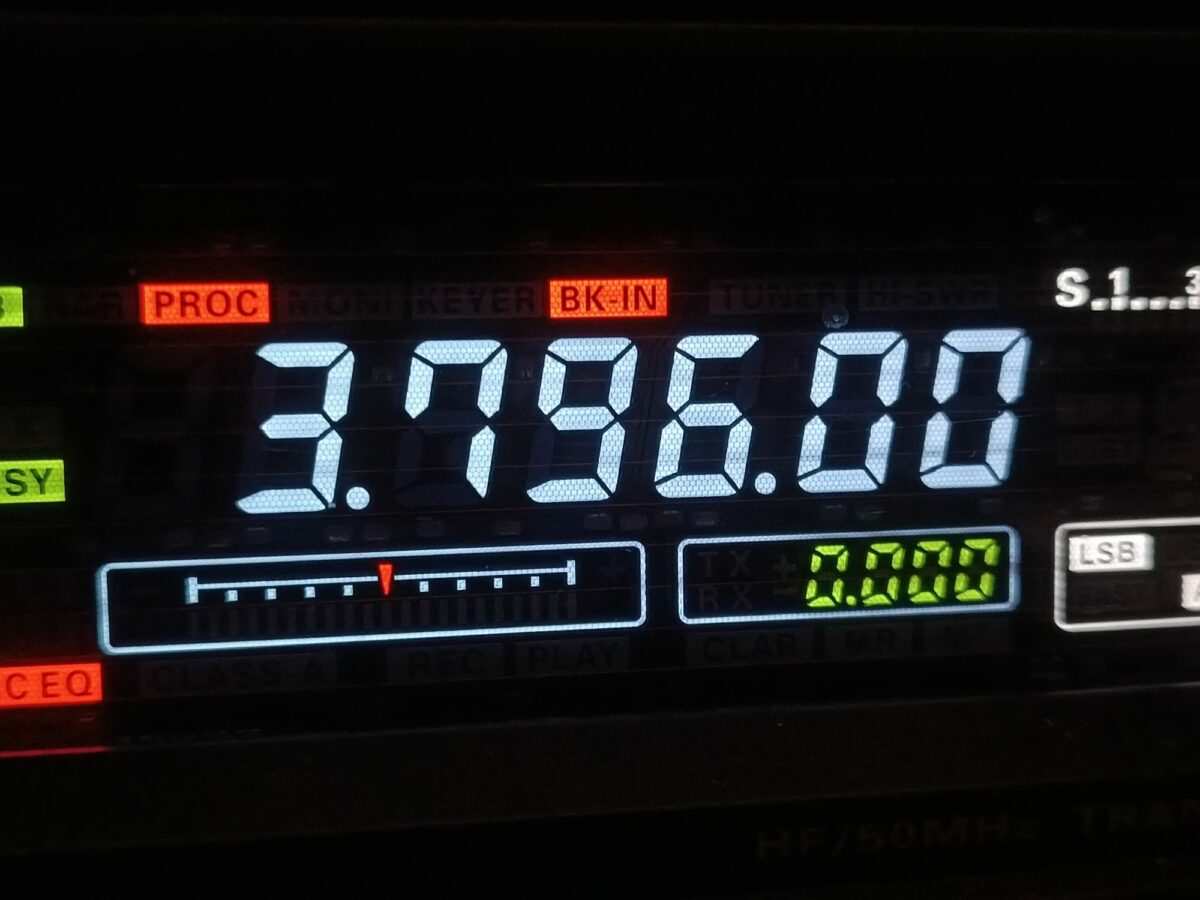
Why 3796 kHz became a popular DX frequency on 80 meters
If you’ve spent time chasing DX on the 80-meter band, you’ve probably noticed that 3796 kHz often comes alive after sunset. While it is not an officially designated international calling frequency, it has gradually become one of the most commonly used meeting points for long-distance SSB contacts between operators in different parts of the world.
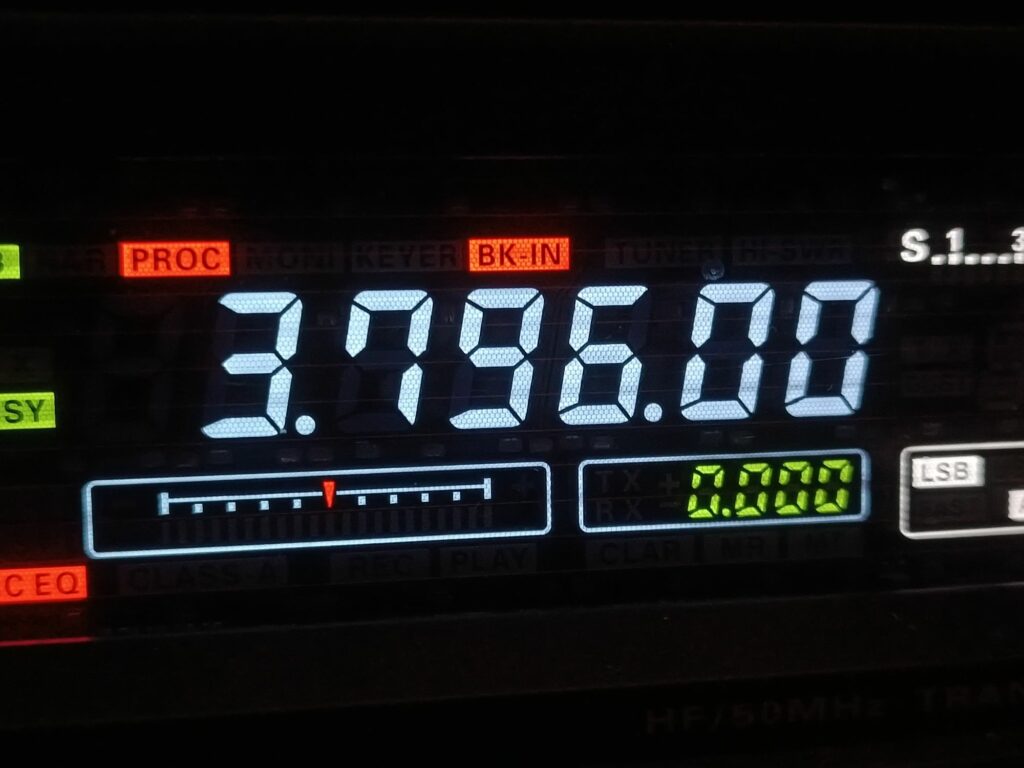
So why 3796 kHz? The answer is a combination of propagation, tradition, and the unique way the IARU regional band plans overlap.
A Frequency That Evolved Naturally
Unlike frequencies that are formally assigned for a specific purpose, 3796 kHz became popular because operators repeatedly found it to be a practical place to establish intercontinental contacts.
DX stations tend to listen where they expect to find other DX operators. Over the years this created a self-reinforcing cycle:
- DX stations called on or around 3796 kHz.
- Chasers learned to monitor the frequency.
- More operators gathered there.
- The frequency developed into an informal international DX meeting point.
Today, many experienced low-band operators check 3796 kHz automatically whenever 80 meters opens to another continent.
The Importance of the IARU Region Overlap
One of the biggest reasons for the popularity of 3796 kHz is that it lies in an area where operators from different IARU regions can legally operate voice while remaining within their respective regional band plans.
Although each licensing authority ultimately determines operating privileges, the IARU band plans have a major influence on operating practice.
Region 1 (Europe, Africa, Middle East)
Most amateur stations in IARU Region 1 use the upper portion of the 80-meter phone segment for long-distance SSB activity. The area from approximately 3775 to 3800 kHz has long been regarded as the preferred DX section.
Region 2 (North and South America)
Operators in the Americas generally have access to a much wider phone allocation extending well above 3800 kHz. This allows North and South American stations to move lower in the band when working Europe or Africa while still remaining comfortably within their phone allocation.
Region 3 (Asia-Pacific)
Many Region 3 countries also have voice privileges that include frequencies around 3796 kHz, making it possible for stations in Asia and Oceania to participate in the same DX activity.
Why 3796 kHz Works So Well
3796 kHz sits almost in the middle of the practical overlap where operators from all three IARU regions can meet.
This offers several advantages:
- It is accessible to most stations operating SSB on 80 meters.
- It avoids the upper edge of the Region 1 phone allocation.
- It leaves some room above and below for stations to spread out during busy openings.
- Operators know where to listen, reducing the need for lengthy CQ searches.
The result is an efficient gathering point that increases the likelihood of making intercontinental contacts.
Operating During Good DX Conditions
During gray-line propagation or periods of low atmospheric noise, 3796 kHz can become extremely busy. It is common to hear:
- Europe working North America.
- Europe working the Caribbean.
- Africa calling Europe.
- South America working Europe.
- Asia and Oceania appearing during seasonal openings.
As pileups develop, stations often move a few kilohertz higher or lower while continuing to announce listening frequencies.
Tradition Matters
Amateur radio has always relied on operating customs. Certain frequencies become popular simply because they consistently produce results.
3796 kHz is one of those frequencies.
Much like well-known DX frequencies on 20 or 40 meters, it has become part of the collective knowledge of low-band DX operators. Even newcomers quickly learn that checking 3796 kHz during evening and nighttime openings is often worthwhile.
Good Operating Practice
Because 3796 kHz is an informal DX center of activity, good operating etiquette helps everyone:
- Listen before transmitting.
- Avoid calling over an ongoing QSO.
- Split operation may be appropriate for rare DX stations.
- Keep overs concise during pileups.
- If the frequency becomes crowded, move a few kilohertz rather than causing unnecessary interference.
The popularity of 3796 kHz is not the result of regulation but of decades of practical operating experience. Its position within the overlapping voice segments used by the three IARU regions makes it one of the most convenient places for intercontinental contacts on 80 meters.
When propagation opens across the Atlantic, into Africa, or toward Asia-Pacific, thousands of operators instinctively tune to 3796 kHz because history has shown that it is one of the best places to find DX. In amateur radio, successful operating habits often become traditions, and 3796 kHz is a perfect example of that process.
Last updated on 2026-07-17 at 00:16 UTC