
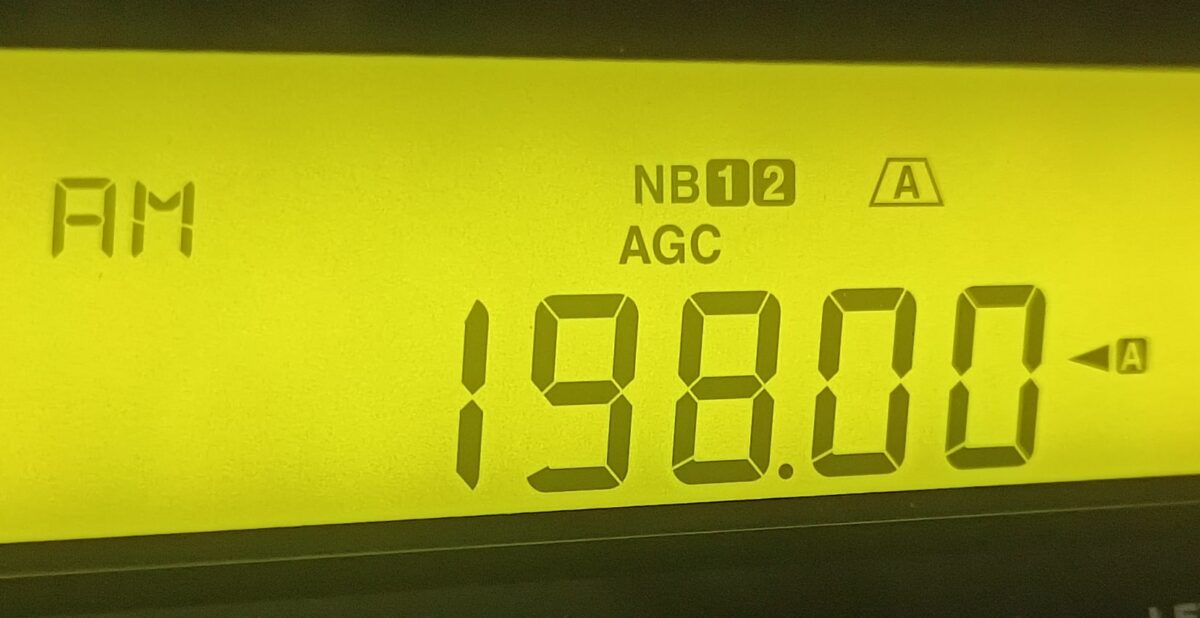
Saying Goodbye to the BBC’s Longwave Era
On 27 June 2026, at 01:00 BST, something remarkable happened – by doing almost nothing.
The familiar carrier on 198 kHz disappeared.
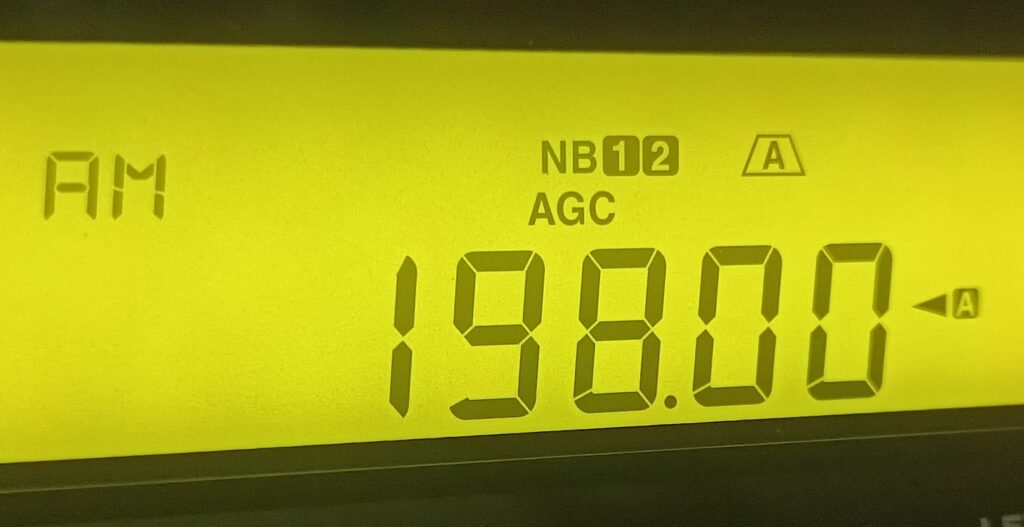
For most people, it passed unnoticed. Radios stayed silent, DAB continued playing, smartphones kept streaming BBC Radio 4, and podcasts filled the airwaves. But for radio enthusiasts, engineers, sailors, DXers, and anyone with a soft spot for vintage technology, it marked the end of one of Britain’s greatest broadcasting achievements.
More than just another radio station
The BBC’s longwave service wasn’t simply another way of listening to Radio 4. It was a national institution.
Broadcasting from the mighty Droitwich transmitter in Worcestershire – supported by Westerglen in Scotland and Burghead in northern Scotland – the 198 kHz signal could blanket virtually the entire United Kingdom and reach far beyond its shores. On winter nights, listeners across mainland Europe could hear Radio 4 with little more than a ferrite rod antenna.
Unlike FM or DAB, longwave didn’t need thousands of transmitters. A handful of high-power sites could cover an entire nation through ground-wave propagation, making it one of the most efficient broadcasting systems ever built.
A frequency that made history
The Droitwich longwave transmitter entered service in 1934, becoming one of the world’s most powerful broadcasting stations. Through the decades, it carried some of the most significant moments in British history.
It broadcast wartime announcements, reached ships at sea, carried the reassuring tones of the Shipping Forecast, and became the home of Radio 4’s unique longwave schedule. During the Second World War, the longwave infrastructure even played a role in broadcasting messages into occupied Europe.
Generations grew up with the unmistakable sound of 198 kHz – a slightly warm, slightly noisy audio quality that somehow became part of the listening experience itself.
The slow farewell
The shutdown did not come as a surprise.
For years, the BBC had been preparing listeners. Separate longwave-only programmes gradually disappeared, with services like Test Match Special moving elsewhere and the distinctive Radio 4 Long Wave schedule becoming increasingly similar to the FM version. Daily announcements encouraged listeners to migrate to FM, DAB, satellite or BBC Sounds.
The reason was ultimately practical.
Maintaining nearly century-old high-power transmitters had become increasingly difficult. Replacement components – especially the enormous transmitter valves – were scarce, specialist engineering knowledge was fading, and operating costs could no longer be justified for the relatively small number of remaining listeners.
More than nostalgia
It’s easy to dismiss longwave as obsolete technology.
After all, digital radio offers clearer audio. Internet streaming provides on-demand listening. Smartphones have become the new portable radio.
But longwave possessed qualities modern systems struggle to match.
One transmitter could cover an entire country.
Reception worked during long-distance travel without retuning.
The signal penetrated rural valleys where digital coverage can still be inconsistent.
And, importantly, it worked independently of mobile networks, broadband infrastructure, or subscription services.
There was an elegance in its simplicity.
The view from the radio hobby
For amateur radio operators and medium- and longwave DX enthusiasts, 198 kHz was more than a programme source.
It was a propagation beacon.
A reliable reference.
A signal against which receivers could be aligned and antennas tested.
Many first discovered the magic of radio by tuning across the longwave band and hearing the unmistakable tones of BBC Radio 4 emerging from the speaker.
Its disappearance leaves the European longwave band quieter than ever.
The end of an era
The shutdown of 198 kHz is not the end of BBC Radio 4.
The programmes continue across FM, DAB, television platforms and the internet.
But it is the end of something much bigger than a transmission frequency.
It is the end of a technology that connected an entire nation with a handful of transmitters, survived world wars, outlived countless communications revolutions, and served listeners faithfully for more than ninety years.
For many people, it was simply another frequency.
For those who love radio, it was a living piece of engineering history.
The carrier has gone silent.
But for generations who tuned to 198 kHz, the memory will continue to resonate long after the last watt left the antenna.
It’s Gone! BBC Radio 4 198kHz Longwave on YouTube
Last updated on 2026-07-17 at 00:22 UTC